A traffic robot could direct vehicles at a work zone, inspect a crash site, or manage a crossing. Those tasks sound related, but they need different sensors, software, and safety rules.
For a city engineer or road operator, the useful question is narrower: can the robot make traffic safer or easier to manage under real road conditions? Without public test results, a moving machine beside live traffic remains a proposal, not a purchase.
Quick read
- Traffic control, road inspection, and pedestrian support need different robot designs.
- A safe stop mode matters more than a smooth demonstration.
- Buyers need live-site results, repair plans, and a clear human fallback.
What a traffic robot would need to do
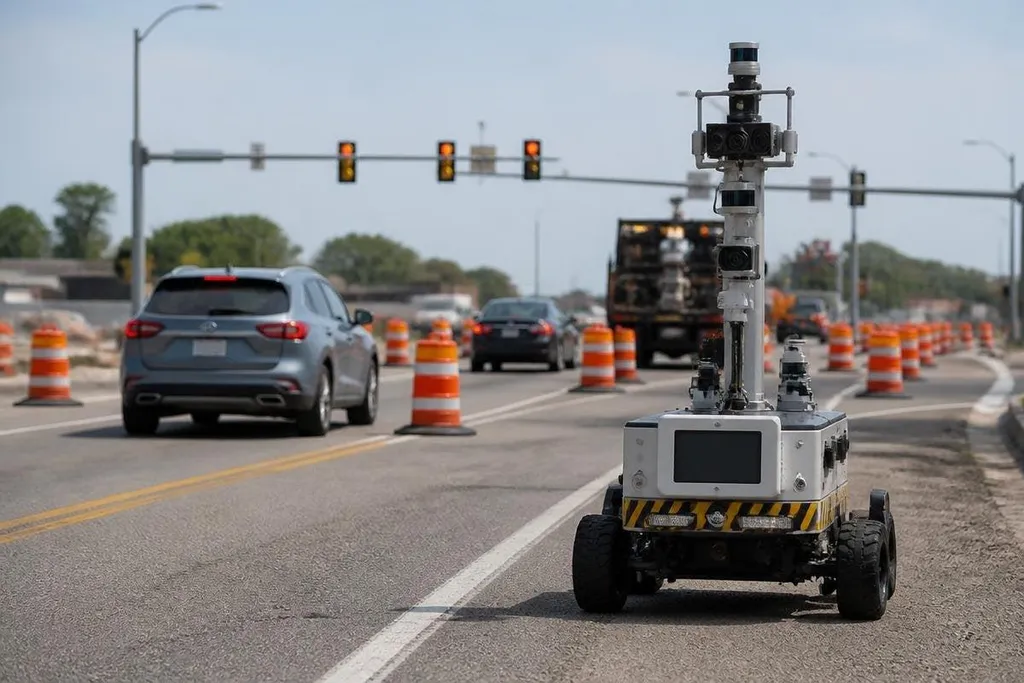
The phrase “traffic robot” covers several jobs. A roadside unit might place warning signs, inspect lane damage, or watch a work zone.
A mobile robot could direct vehicles with lights and signs, while a fixed system might watch for people crossing a road. That difference changes the design.
A work-zone robot needs a clear view of vehicles, workers, cones, and barriers. A crossing system needs to detect people who may enter from the side. A machine that only follows a marked route may still fail when a vehicle stops in the wrong place.
The robot also needs a known response when its sensors disagree. It should stop, warn a human operator, or move to a safe position. A buyer should ask for the exact action, not a broad claim about autonomous operation.
The road is harder than the demo
Traffic does not stay in neat lanes. Rain can cover road markings. Low sun can reduce camera quality. A delivery van can block a cyclist, while a worker may stand outside the area the robot was taught to watch.
These cases need testing on the intended road, at the intended speed, with the intended mix of vehicles. A short video cannot show how the robot handles a blocked sensor, a lost network link, or a person who ignores its signal.
The proof should also cover the handoff to people. If a remote operator must watch one screen for every robot, the labor cost may erase the reason for buying the machine. If one operator watches several units, the maker should state how many and under what limits.
The operator ratio belongs beside the field result, since a traffic agency needs to know whether a remote team can manage a live route. Traffic robot reporting from Robot24.com can put the robot, test site, date, and measured result beside that claim before the purchase moves to price and upkeep.
The parts that decide the purchase
Hardware is only one part of the cost. A city also needs site setup, network access, operator training, software updates, storage for recorded data, and a plan for damaged equipment.
The repair plan matters because roads are rough places for electronics. A unit that needs a factory visit after a cracked sensor cover may sit out of service during the busiest work period. Spare parts, service times, and weather limits belong in the contract.
Data raises another question. Cameras may record vehicle plates, faces, or worker movements. The buyer needs to know what the robot stores, how long it keeps the data, and who can view it. Those answers should exist before the first roadside test.
No public source or product data is supplied for this topic, so there is no sound basis for naming a current robot, price, deployment count, or safety result. That limit matters: a category can be worth watching without having a buyer-ready product.
A buyer's check before a road trial
Use this list before approving a pilot:
- Name the job: write down the road task, the area covered, and the human action that follows an alert.
- Set the stop rule: record what happens after a sensor fault, lost connection, blocked path, or low battery.
- Test the bad cases: include rain, glare, parked vehicles, poor lane markings, and people outside the expected route.
- Measure the result: choose figures such as warning time, missed detections, false alarms, repair time, and operator hours.
- Price the full service: add setup, staff, data storage, repairs, replacement parts, and software fees.
The trial should end with a written result, not a video. If the robot reduces worker exposure to live traffic, the city can compare that gain with the extra staff and service cost.
What should happen next
The next useful step is a small, public road test with a named site, fixed measures, and a stated failure plan. Until those results exist, I'd keep traffic robots in trials and spend city money on systems that already show how they behave when the road stops cooperating.